Ecclesiastical Court Judges Training with PJI
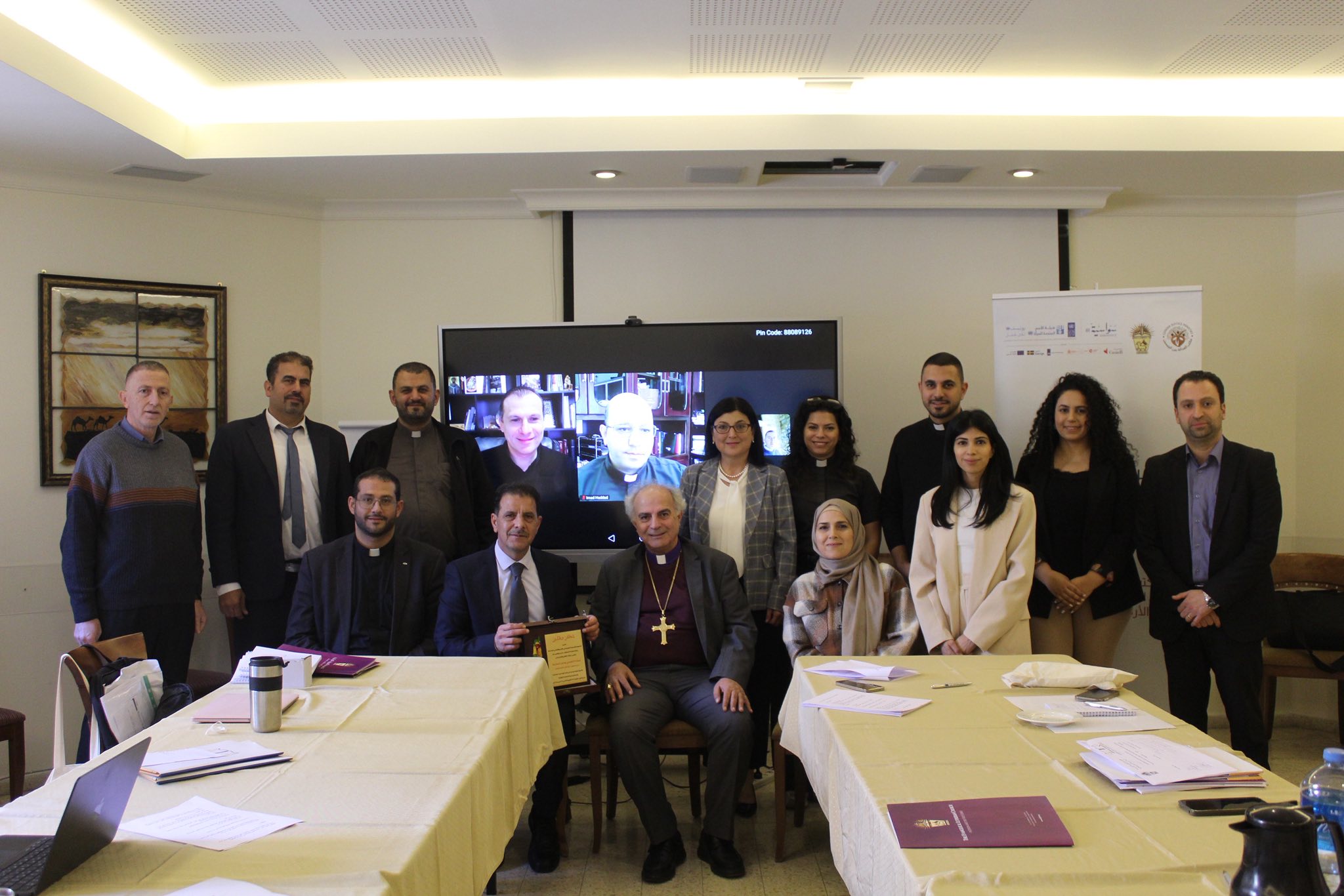
Under the patronage of Bishop Dr. Sani Ibrahim Azar, the ELCJHL Ecclesiastical Court in partnership with the ELCJHL Gender Justice Ministry held a three-day training for all judges and pastors for the church. This training was led by the Palestinian Justice Institute with support from the Sawasya Programme Palestine.
In the Palestinian legal system, issues related to personal status and family law are handled by religious courts. All ELCJHL church members go to our Ecclesiastical Court to handle cases of marriage, divorce, child custody, inheritance, and more. The Bishop, ELCJHL pastors, and lay judges serve on this court. Though all Sharia and criminal Palestinian court judges receive legal training through the PJI, the ELCJHL court is the first Ecclesiastical Court to hold this training for its judges.
The first training, led by Judge Wissam Salaymeh, Director of the Palestinian Judicial Institute, focused on key procedural skills: filing and registering cases, written responses, requests and defenses, hearing procedures, and issues related to litigants. These sessions allowed our judges and pastors to explore best practices, ask questions, and strengthen their understanding of family and personal status laws. We are proud of this step to further integrate the ELCJHL court with other parts of the Palestinian legal system and promote equality and justice for those accessing services through our court.
Building on this training, several additional training sessions are planned. The next session will address judicial settlement, attendance and absence rules, followed by a specialized training on women’s and children’s rights and the main international conventions related to gender justice and child protection. A final set of sessions will focus on judicial eligibility and recusal, issuing and correcting judgments, and avenues of appeal. Together, these trainings form a comprehensive program to strengthen legal knowledge, improve court procedures, and support the rights and dignity of all community members.
Share :